GPL vs. Premium WordPress Licenses: What You Need to Know in 2026
Premium WordPress licenses refer to themes and plugins sold with additional services—such as dedicated technical support, automatic updates, AI-assisted tools, or exclusive cloud features—often at a premium cost. While the core PHP code of these products is still strictly GPL-licensed (as they are derivative works of WordPress), developers increasingly bundle non-GPL elements—like proprietary CSS, JavaScript, or exclusive API access—under separate licenses. This practice, known as split licensing, allows developers to sustainably charge for access to these additional components or services.
For example, a premium plugin might include GPL-licensed PHP code, but restrict access to premium developer support or 1-click automatic updates unless you purchase a valid license key. The core code remains free under the GPL, but the added value justifies the cost.
Key Differences Between GPL and Premium Licenses
The distinction between GPL and premium licenses ultimately comes down to scope, accessibility, and peace of mind. Here are the core differences for 2026:
-
1. Licensing Freedom:
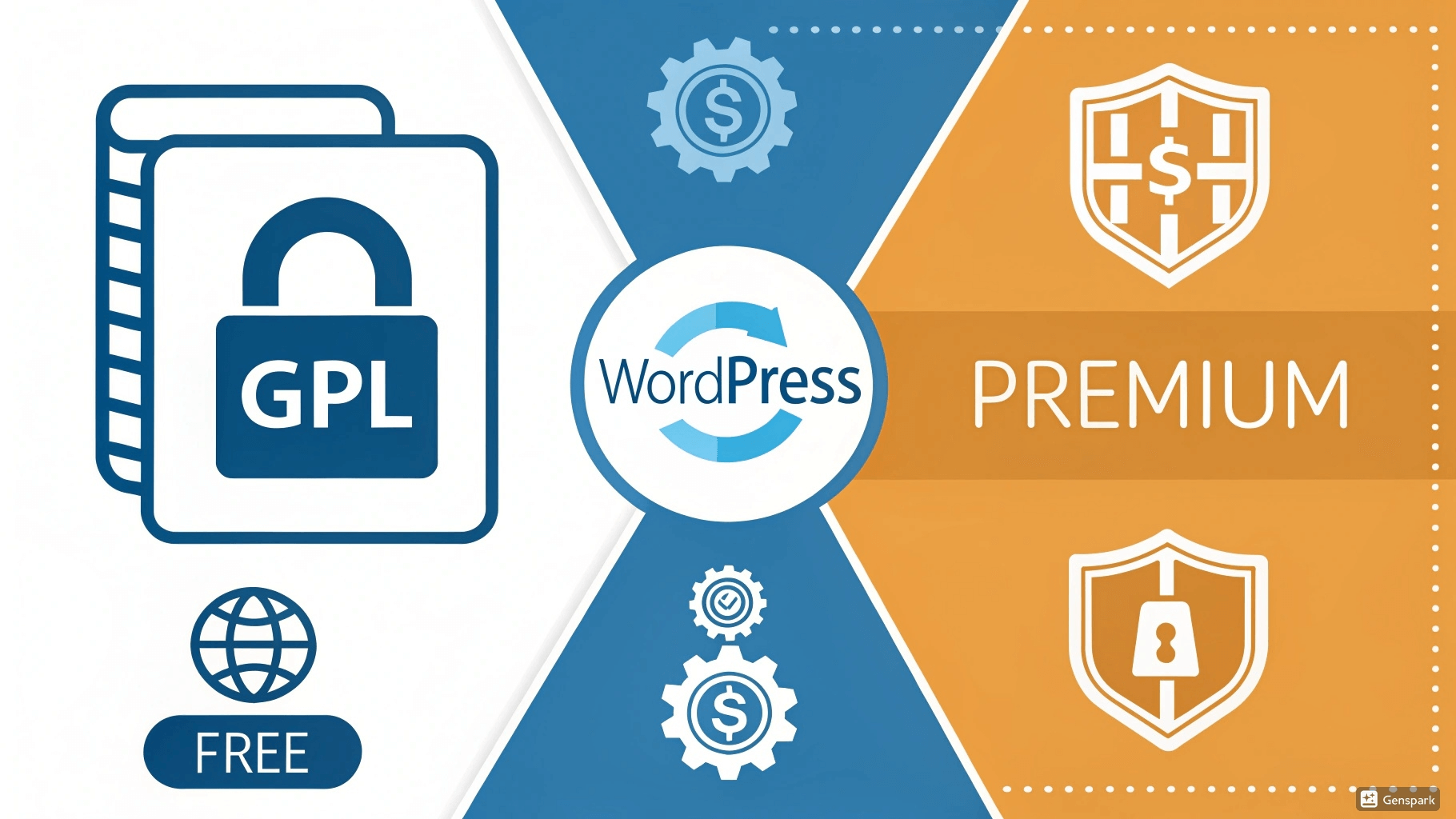
GPL: Grants full freedom to use, modify, and redistribute the software. You can access the source code, tweak it, and share it freely.
Premium: While the PHP code is GPL, premium licenses restrict proprietary assets (images, heavy JS scripts) and backend SaaS features.
-
2. Cost & Delivery:
GPL: Free to use. However, obtaining raw files safely requires technical know-how.
Premium: Requires payment (often an annual subscription in 2026), covering ongoing development, premium API usage, and verified secure downloads.
-
3. Support and Updates:
GPL: Community-driven support (forums) and manual updates.
Premium: Dedicated ticketing support, live chat, and seamless 1-click dashboard updates to protect against zero-day vulnerabilities.
Why Your License Choice Matters for Publishers
Understanding the difference between GPL and premium licenses is critical—especially if you are trying to find the Best WordPress Themes to Start a News Site. News portals require absolute stability, high security, and rapid loading times to pass Google's latest Core Web Vitals.
Cost vs. Value
While testing out GPL News Themes is an excellent, cost-effective way to design your initial layout, premium licenses provide the reliability required for scaling. If your site generates ad revenue, the cost of premium support pays for itself during a technical crisis.
Security Risks (The 2026 Landscape)
Using GPL software from unverified sources or “nulled” (cracked) versions exposes your site to severe malware. Premium licenses guarantee cryptographically signed, clean code direct from the developer.
The Role of GPL Clubs
GPL clubs legally redistribute GPL-licensed premium themes and plugins at a fraction of the cost. In recent years, reputable GPL clubs have implemented automated malware scanning to improve safety. While they are a budget-friendly way to access the Best WordPress Themes to Start a News Site, they lack official developer support and automatic dashboard updates. Use them wisely—they are great for developers building staging environments or users on strict budgets, but they shift the burden of maintenance entirely onto you.
Practical Tips: Which Should You Choose?
- For Beginners: Opt for premium licenses. The investment in 1-click updates and dedicated support will save you hours of frustration.
- For Developers: Leverage trusted GPL News Themes and plugins for heavy customization and client testing, but ensure you understand how to manually patch security flaws.
- For E-commerce & High-Traffic Publishers: Always prioritize premium licenses for critical infrastructure (like caching, SEO, and WooCommerce).
- Never Use Nulled Software: Avoid cracked themes entirely. They are the #1 cause of hacked WordPress sites.
Conclusion
The choice between GPL and premium WordPress licenses depends entirely on your technical expertise, budget, and project scale. The open-source nature of the GPL allows anyone to build incredible sites affordably, while premium licenses act as an insurance policy—delivering vetted security, automation, and expert help.
By understanding these boundaries, you can make informed decisions that balance budget with security. For more details on the GPL structure, visit the official WordPress license page.





 Freedom of Use: You can run the software for any purpose.